
A TFSA can hold far more than cash. Qualified investments include savings deposits, GICs, bonds, mutual funds, segregated funds, and most securities listed on a designated stock exchange, including stocks, ETFs and REITs. Real estate, cryptocurrency held directly and collectibles do not qualify. Putting the wrong asset in your account can cost you a tax equal to half its value.
This guide walks through each category, the grey areas that trip people up, and a short check to run before you buy anything inside your account.
TL;DR
- Cash, GICs, government and corporate bonds, mutual funds, segregated funds, and securities on a designated exchange (stocks, ETFs, REITs) are qualified TFSA investments.
- Physical real estate, collectibles such as rare coins, and cryptocurrencies held directly are not qualified.
- Holding a non-qualified investment triggers a tax of 50% of its fair market value, so check before you buy, not after.
- A TFSA is for savings and investing. Trading like a professional can lead the CRA to treat the activity as a business.
- Your annual limit is a separate question from what you can hold: the 2026 dollar limit is $7,000.
Table of Contents
- What counts as a qualified investment
- Cash, GICs and bonds: the steady end of the account
- Mutual funds, ETFs and segregated funds
- Stocks and the designated stock exchange rule
- What does not qualify
- The cost of getting it wrong
- Moving existing investments into your TFSA
- Self-directed accounts and the day-trading line
- A five-step check before you buy
- Our perspective: qualification is the floor, not the plan
- Plan your TFSA with a certified planner
- FAQ
- Sources
What counts as a qualified investment
The Canada Revenue Agency (CRA) says the types of investments permitted in a TFSA are generally the same as those permitted in an RRSP. That is useful shorthand: if you know what an RRSP can hold, you already know most of the TFSA list.
The legal definition sits in the Income Tax Act and its regulations. The CRA explains how it applies in Income Tax Folio S3-F10-C1, the document to read if your situation is unusual.
In plain terms, the main categories are below.
| Category | Qualifies? | Notes |
|---|---|---|
| Cash and savings deposits | Yes | Held at the TFSA issuer |
| GICs and other guaranteed deposits | Yes | Check the term against when you may need the money |
| Government and corporate bonds | Yes | Debt that is investment grade or listed on a designated exchange |
| Mutual funds | Yes | Offered by your TFSA issuer |
| Segregated funds | Yes | Insurance-company funds, with extra features |
| Stocks on a designated exchange | Yes | For example the TSX, NYSE, NASDAQ |
| ETFs and REITs on a designated exchange | Yes | Listed units trade like stocks |
| Physical real estate | No | Land and houses are real property |
| Collectibles (rare coins, art) | No | Not a qualified property |
| Cryptocurrency held directly | No | Not money issued by a government |
The qualification of bonds and similar debt, and of stocks and funds, is described by the CRA on its page about non-permitted TFSA investments. Debt obligations generally qualify if they have an investment grade rating or are listed on a designated stock exchange.
Cash, GICs and bonds: the steady end of the account
Most people start here. A TFSA that holds only cash is a perfectly valid use, and the interest is tax-free. If you are weighing it against an ordinary bank account, our comparison of a TFSA and a savings account for Canadians covers how to keep emergency money reachable while still sheltering the interest.
GICs fit when you know the date you will need the money. Bonds suit people who want income and some predictability. Because interest is fully taxable outside a registered account, interest-paying holdings are a common candidate for sheltering. That is a planning choice, not a rule, and it depends on your whole portfolio.
Mutual funds, ETFs and segregated funds
Funds are the easiest way to hold a diversified portfolio inside a TFSA. Two points matter for qualification.
First, the fund needs to be one your TFSA issuer offers or one that is a qualified investment by its structure. Mutual funds and units of listed ETFs both generally qualify. If you are choosing between the two, our one-page ETF vs mutual fund checklist lays out costs, trading and minimums.
Second, segregated funds are a separate product. They are issued by insurance companies and combine investment growth with insurance features. They are also qualified TFSA holdings. We compare them in segregated funds vs mutual funds, including the points a long-term saver should weigh before choosing.
Stocks and the designated stock exchange rule
For shares, the key phrase is “designated stock exchange”. A share listed on one qualifies. The Department of Finance keeps the list of designated exchanges, and it includes the major Canadian and U.S. markets. A security on a smaller, unlisted or over-the-counter market may not qualify, so confirm before buying.
A practical habit: before you buy a foreign or thinly traded stock, ask your issuer whether it is a qualified investment for your account. A short answer in writing is worth having.
One cost to keep in mind: dividends from foreign companies can be subject to withholding tax in the source country, and a TFSA does not always shelter you from it. Ask your advisor how that applies to the specific holding.
What does not qualify
The Nova Scotia Securities Commission lists items that generally cannot be held in registered accounts, including real property, collectibles such as rare coins, and cryptocurrencies, which are not money issued by a government.
A few cases cause the most confusion.
- A rental property or vacation home. You cannot put real property into a TFSA. Property is financed and held outside the account. If an investment property is your goal, a mortgage broker can compare financing options across many lenders, for instance this guide to investment property mortgages in Canada.
- Bitcoin bought on an exchange. Holding the coin itself does not qualify. Exchange-listed funds that hold crypto are a different instrument, and whether a particular one qualifies depends on its structure and listing, so ask your issuer.
- Gold bars or coins. Physical bullion and collectible coins are not qualified. Some listed funds backed by metal may be, again depending on structure.
- Private company shares. These are complicated and often carry additional rules. Do not assume a private holding is allowed.
- Futures-based holdings. Readers often ask whether a fund using futures is allowed. The answer depends on how the fund is structured and listed, so ask your issuer rather than guessing.
The cost of getting it wrong
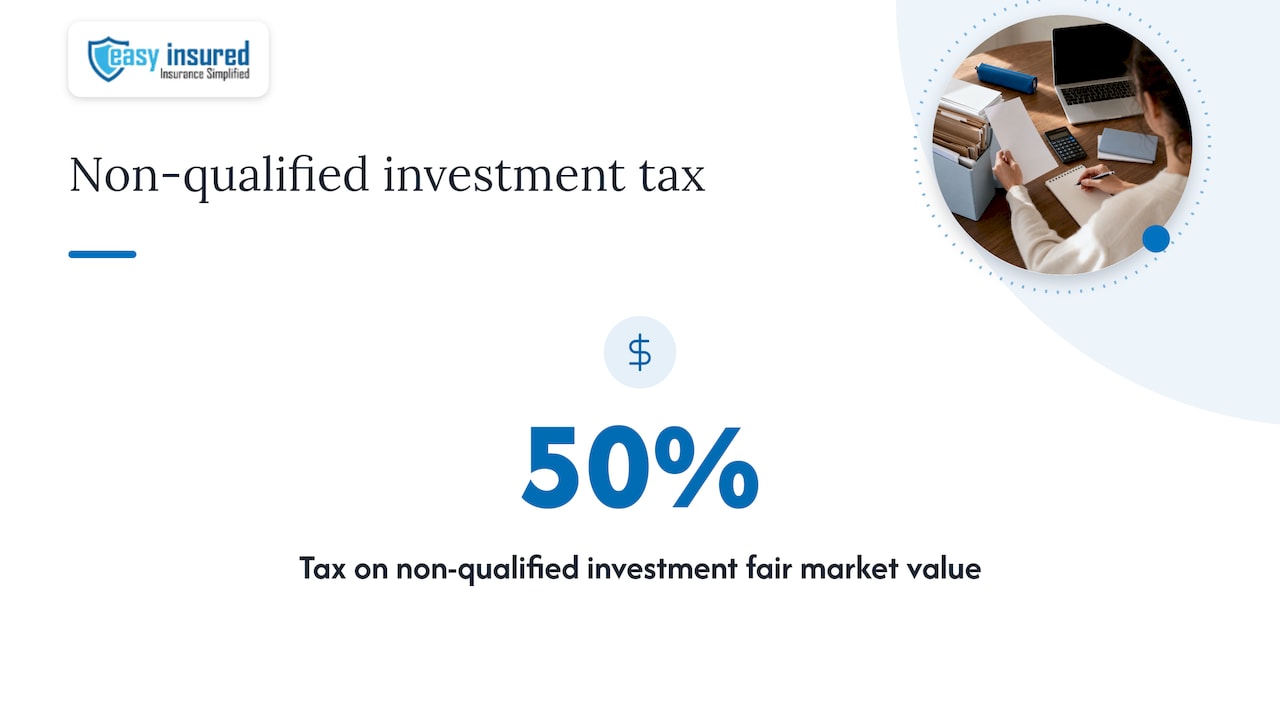
A non-qualified investment is expensive. According to the CRA, holding one means the TFSA trust is taxed at 50% of the fair market value of the investment when it was acquired or became non-qualified. There are also rules on income earned from it, and the CRA directs people to Folio S3-F10-C1 for detail.
The CRA distinguishes between qualified, non-qualified and prohibited investments, and each carries different tax treatment. If you suspect you hold something outside the rules, contact your TFSA issuer and a tax professional promptly. Do not wait for the next tax season.
This is a different problem from putting in too much money. Overcontributions carry their own monthly penalty, which we explain in how to fix TFSA overcontributions. Before you move anything, check your room using our 2026 TFSA contribution limit guide. The CRA states that the TFSA dollar limit for 2026 is $7,000, and that figure is added to your room on January 1.
Moving existing investments into your TFSA
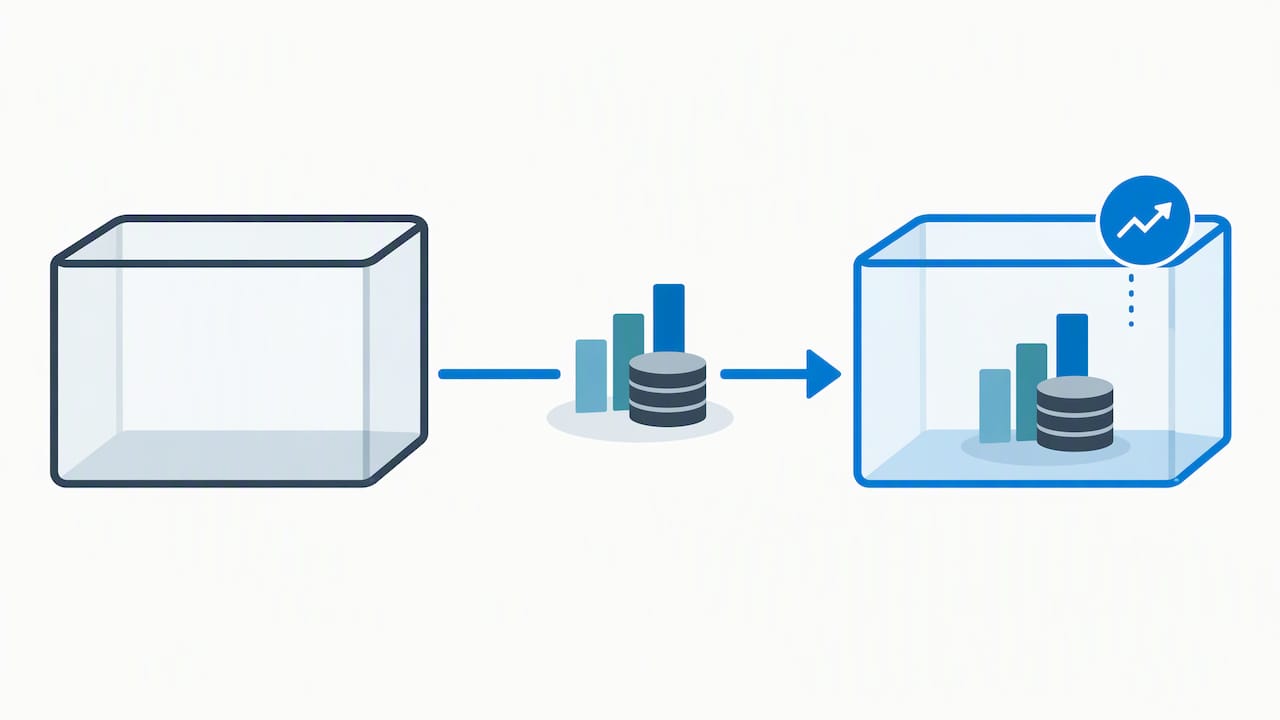
You do not always have to sell first. The CRA allows contributions in kind, meaning you transfer a qualified investment from a non-registered account into the TFSA. The asset must be one that qualifies, such as a GIC, bond, mutual fund or listed security.
Before you do it, note this: moving an asset at a loss does not give you a deductible capital loss, while a gain is generally still taxable on the transfer. Talk to a tax professional before moving something that has changed a lot in value. Your TFSA contribution counts at the fair market value on the day of the transfer, and it uses up your room like any other contribution.
Self-directed accounts and the day-trading line
A self-directed TFSA gives you control to buy and sell qualified investments yourself. The CRA is clear that the account is meant for savings, and that professional-style trading can lead the CRA to treat the activity as a business. In that case the income can become taxable.
There is no fixed trade count that makes you a professional trader. Frequency, holding periods, your knowledge and the time you spend are all factors. If you are trading often, get advice before you continue.
A five-step check before you buy
- Name the asset type. Is it cash, a deposit, a bond, a fund, or a listed security? If it is real property, a collectible, or a coin you hold yourself, stop.
- Check the listing. For a stock, ETF or REIT, confirm it trades on a designated stock exchange.
- Ask your issuer. Your TFSA provider decides what it will administer. Even a qualified investment may not be offered by your issuer.
- Confirm your room. Look at your CRA account and your issuer’s records.
- Match it to your purpose. Money for an emergency belongs in something you can reach and that will not fall in value at a bad moment.
Our perspective: qualification is the floor, not the plan
Most questions we get are not about whether something is allowed. They are about whether it fits. A holding can be perfectly qualified and still be wrong for you: a volatile stock for money you need in a year, or a long GIC for savings you may need soon.
We look at the TFSA as one piece of a wider picture. For families, that often means pairing it with life and disability coverage so a health event does not force you to drain the account. For business owners, it means thinking about the TFSA alongside corporate savings, retirement income and an estate plan. The account is flexible, and that flexibility is easy to waste when it becomes a place to park whatever is left over.
Our advice is to decide the job of each dollar first, then pick the qualified investment that does that job. We also suggest naming a successor holder or beneficiary so the account passes smoothly, which we cover in our guide to TFSA successor holders.
— Frank
Plan your TFSA with a certified planner
If you want a second opinion on what belongs in your TFSA, we can help. Easy Insured offers investment planning and financial planning for Canadian families and business owners, alongside the insurance that protects the plan. You can see all our planning services on our services page.
FAQ
What investments qualify for a TFSA?
Cash, GICs, government and corporate bonds, mutual funds, segregated funds, and securities listed on a designated stock exchange, such as stocks, ETFs and REITs, generally qualify. The CRA says the permitted types are generally the same as for an RRSP. Your issuer may offer only part of that list.
What investments cannot be held in a TFSA?
Real property such as land or a house, collectibles such as rare coins, and cryptocurrencies held directly are not qualified. Other property that does not meet the definition in the Income Tax Act is also excluded. If you are unsure, ask your issuer before buying.
What happens if I hold a non-qualified investment?
The TFSA trust is taxed at 50% of the fair market value of the investment, measured when it was acquired or became non-qualified, according to the CRA. Contact your issuer and a tax professional as soon as you notice it. Further tax rules can apply to income earned on the holding.
Can I hold U.S. stocks in a TFSA?
Yes, if they are listed on a designated stock exchange, which includes major U.S. markets. A TFSA does not always shelter you from foreign withholding tax on dividends, so the net return can be lower than you expect. An advisor can show how it applies to your holdings.
Sources
- Before you contribute to a TFSA, Canada.ca
- If you owe tax on non-permitted TFSA investments, Canada.ca
- What is a TFSA, Canada.ca
- Calculate your TFSA contribution room, Canada.ca
- Income Tax Folio S3-F10-C1, Canada.ca
- Investments eligible for registered accounts, Nova Scotia Securities Commission