
You can elect to split up to 50% of your eligible pension income with your spouse or common-law partner, provided you both meet residency and living-together rules. CPP and OAS payments do not qualify for this election. Done correctly, the strategy shifts taxable income to the lower-earning spouse, which can shrink a transferor’s OAS clawback while modestly raising the receiving spouse’s tax bill.
TL;DR:
- Both spouses must be Canadian residents on December 31, live together, and sign a new Form T1032 each year; the election never carries forward.
- RRIF and annuity payments generally qualify only from age 65, unless paid after a spouse’s death; CPP, QPP, and OAS never qualify.
- For ages 65 to 74, 2025 OAS recovery starts above $93,454 in net world income; splitting may reduce clawback but raise the recipient’s taxes.
- Run both spouses’ tax calculations before choosing a percentage, because the recipient may lose individual income tested credits even when the transferor reduces an OAS clawback.
- CPP pension sharing is a separate Service Canada program for couples who both contributed; it redistributes CPP payments without changing their combined total.
Table of Contents
- Who can elect to split pension income: residency, relationship, and timing rules
- Which payments count as eligible pension income (and which do not)
- Step-by-step: complete Form T1032 and record the split on your tax returns
- How pension splitting changes tax bills and benefits (OAS clawback, age amount, credits)
- Why CPP pension sharing and CPP credit splitting are different and when each applies
- Three short worked examples showing 0%, 25%, and 50% splits and net effects
- Official forms, worksheets, and next practical steps
- When pension splitting makes sense as part of retirement income planning
- How we help you plan retirement income and manage the election process
- FAQ
- Sources
- Authoritative links for forms and official guidance
Who can elect to split pension income: residency, relationship, and timing rules
Before you fill out any forms, confirm that both you and your spouse or common-law partner clear the basic eligibility bar. The rules hinge on where you lived, whether your relationship was intact, and whether you both agree to the election in writing.
According to CRA guidance, you generally need to meet these conditions:
- You and your spouse or common-law partner were both residents of Canada on December 31 of the tax year, or on the date of death if one of you died during the year.
- You were not living separate and apart for 90 or more continuous days that included December 31, due to a breakdown in the relationship.
- You both agree to make a joint election and sign Form T1032 for that specific tax year.
The election is not automatic and it does not carry forward. Each year you want to split income, you file a fresh T1032 alongside your returns. A few practical steps make the process smoother:
- Confirm both spouses’ residency status and relationship status as of December 31.
- Gather T4A, T4A-RCA, and RRIF slips to total eligible pension income.
- Agree on the percentage to split, from 0% up to the 50% maximum, and complete T1032 together.
Age matters too. Some pension income types only qualify once the pension recipient turns 65, which we cover next. If you miss the filing deadline, the CRA allows amended or late elections in certain circumstances, though waiting adds complexity and risk, so it is worth filing on time whenever possible.
Which payments count as eligible pension income (and which do not)
Not every retirement payment qualifies for splitting, and mixing up eligible and excluded amounts is one of the most common mistakes retirees make when filing. Knowing what counts before you total your numbers saves a redo later.
Eligible pension income generally includes:
- The taxable portion of life annuity payments from a registered pension plan.
- RRIF, annuity, and RRSP annuity payments, but only once the transferor turns 65, or earlier if the payments arise because of a spouse’s death.
- Qualifying amounts reported in box 17 of a T4A-RCA slip.
Income that does not qualify includes CPP and QPP benefits, OAS payments, foreign pensions exempt under a tax treaty, and most variable pension payments unless the age or death exception applies. This exclusion list is explicit: CRA guidance confirms CPP, QPP, and OAS are never part of this election, no matter your age.
When you review your slips, match amounts carefully. A T4A will usually show pension payments in a specific box, while RRIF withdrawals and annuity payments appear on their own slips. If you hold a spousal RRSP, check the attribution rules first, since early withdrawals from a spousal plan can be taxed back to the contributing spouse regardless of any pension-splitting election.
Pro Tip: Keep a simple spreadsheet listing each slip, its box number, and whether it qualifies for splitting. It turns a confusing pile of paper into a five-minute calculation next tax season.
Step-by-step: complete Form T1032 and record the split on your tax returns
Once you know your eligible income, the actual mechanics are mostly paperwork. Here is the sequence that keeps both returns consistent and audit-ready.
- Complete Form T1032 jointly, entering the elected amount both spouses agree to transfer.
- Sign the form together, even if you plan to file electronically.
- On the transferring spouse’s return, deduct the elected amount on line 21000.
- On the receiving spouse’s return, report the allocated amount and claim the pension income amount on line 31400 if they qualify.
- Allocate any tax withheld at source proportionally between both returns on line 43700.
A few details trip people up:
- If you e-file, you still need to keep the signed paper T1032 on hand. The CRA may request it later, and a missing signature can delay a review.
- The CRA cannot reduce tax withheld at source in anticipation of a pension split, so the proportional allocation happens after the fact, on your returns, not at the payer level.
- Pension splitting is purely administrative. No actual money needs to change hands between spouses for the election to take effect, since it only reallocates reported income and the associated tax.
If you realize after filing that a split should have been made, or made differently, the CRA accepts late or amended elections in some circumstances. Given the complexity of amended returns, this is a good moment to loop in a tax professional rather than guess at the correct figures.
How pension splitting changes tax bills and benefits (OAS clawback, age amount, credits)
The biggest reason retirees consider pension splitting is the OAS recovery tax, commonly called the clawback. OAS recovery tax is calculated on net world income, and once that income crosses a set threshold, the government recovers part of the OAS payment.
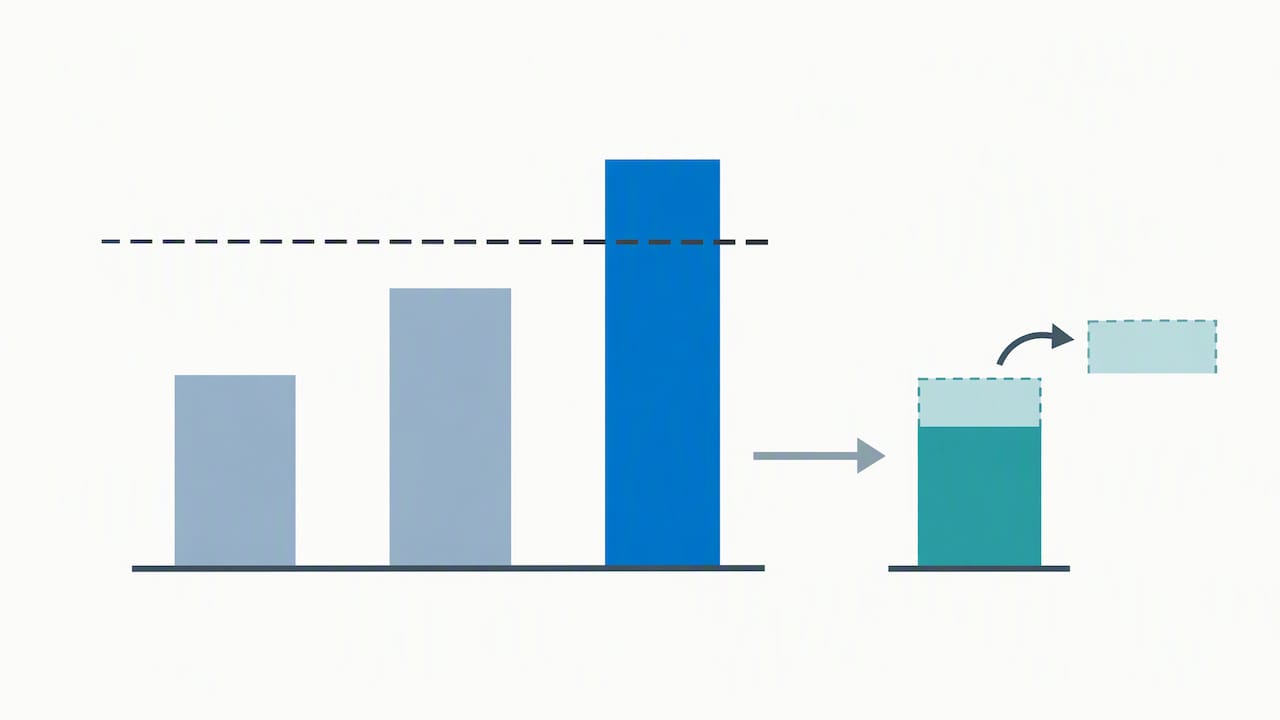
The 2025 OAS repayment range for individuals aged 65 to 74 starts at $93,454, meaning net world income above that level triggers partial clawback. Shifting eligible pension income to a lower-earning spouse can pull the higher earner’s net income back under that line, avoiding or reducing the clawback entirely.
Other effects worth checking before you file:
- The age amount and spouse or common-law partner amount are both calculated on individual net income, so shifting income can change who qualifies for these credits and by how much.
- Household-level benefits like the GST/HST credit are based on combined family net income, so splitting pension income between spouses does not change those calculations.
- Provincial and territorial credits that key off individual net income can shift in the same way federal credits do, so check your province’s specific thresholds.
Because the receiving spouse’s income rises, their own tax bracket, credits, and even income-tested benefits can move in the opposite direction. This is why we recommend running a trial calculation with both spouses’ full numbers rather than assuming a 50% split is automatically optimal. Our OAS clawback breakdown walks through the math in more detail if you want to model your own numbers before deciding.
Why CPP pension sharing and CPP credit splitting are different and when each applies
CRA pension income splitting is often confused with two separate CPP programs, and mixing them up leads to missed opportunities or wasted paperwork.
- CPP pension sharing is applied for through Service Canada, not the CRA, and it redistributes the couple’s CPP retirement pension amounts between spouses. The total combined CPP income for the couple stays the same, only the split changes.
- CPP credit splitting happens after a divorce or separation and is generally mandatory rather than elective, dividing CPP contribution credits earned during the relationship.
- CPP sharing makes sense when both spouses have contributed to CPP and are living together; it is a different lever from the annual T1032 election, which applies to pension plan, RRIF, and annuity income rather than CPP itself.
If you are weighing both tools, treat them as complementary rather than interchangeable: CPP sharing adjusts CPP specifically, while T1032 handles everything else that qualifies as eligible pension income.
Three short worked examples showing 0%, 25%, and 50% splits and net effects
These illustrative scenarios show how the same pension income produces different outcomes depending on the split percentage. The dollar figures below are examples only, not published rates.
- Example A, modest pension: Say one spouse reports $20,000 in eligible pension income and the other reports $10,000. Splitting 25% moves $5,000 to the lower earner. With both incomes well under the OAS threshold, the tax difference is small, often just a shift between marginal brackets.
- Example B, higher earner near the OAS threshold: Say the higher-earning spouse has net world income of $98,000, above the $93,454 repayment threshold for ages 65 to 74. Splitting 50% of a $15,000 pension moves $7,500 to the other spouse, potentially bringing the transferor’s net income back under the threshold and avoiding clawback on that portion.
- Example C, receiver’s credits shift: Say the receiving spouse was previously eligible for a provincial income-tested credit. Adding split income could push them past that credit’s cutoff, erasing a benefit even as the transferor saves on OAS clawback.
Pro Tip: Always calculate both spouses’ full tax positions before and after the proposed split. A split that helps one spouse’s OAS bill can quietly cost the other spouse a credit worth more than the savings.
Official forms, worksheets, and next practical steps
Start with Form T1032 itself. Complete it jointly each year, and keep a signed paper copy even if you file electronically, since the CRA may ask for it later.
- Use the Federal Worksheet tied to line 31400 to calculate the pension income amount correctly if you are the receiving spouse.
- Non-residents and deemed residents should confirm their residency status meets the December 31 test before assuming eligibility.
- If your pension is paid through a plan administrator, ask about requesting adjusted tax deductions at source, and remember that withheld tax still gets reallocated between spouses on your returns using line 43700.
When pension splitting makes sense as part of retirement income planning
Pension splitting is most effectively used for cash-flow smoothing and OAS clawback management, not as a one-size-fits-all tactic. It works best when one spouse’s income sits meaningfully above the other’s or near a clawback threshold. It is less useful when both spouses already have similar income levels, since the tax movement is minimal. Annuities, RRIFs, and other income products you choose in retirement directly affect how much eligible income you have to split, so it is worth reviewing those choices together. Always verify your specific numbers with a planner before filing.
— Frank
How we help you plan retirement income and manage the election process
Deciding how much pension income to split, and which income sources to draw from first, works best as part of a broader retirement income plan rather than a standalone tax form. Our retirement planning services help you map out pension, RRIF, and annuity income alongside tax-aware withdrawal strategies, so the T1032 election fits into a plan built around your full household picture.

We also provide insurance-related retirement security services, including annuities and income products that affect eligible pension income available to split in future years.
- Retirement income mapping that accounts for pension, RRIF, and annuity sources together.
- Tax-aware advice on timing withdrawals and elections across both spouses’ returns.
- Insurance and income-product guidance that fits your broader estate and retirement goals.
If you are weighing a pension split this year, reach out through our services page and we will walk through your numbers with you.
This article is general information, not a substitute for advice from a qualified financial advisor. Consult a qualified financial professional about your own circumstances before acting on anything here.
FAQ
What are the disadvantages of pension income splitting?
The main trade-off is that the receiving spouse’s net income rises, which can push them into a higher bracket or reduce their eligibility for income-tested credits. It also requires a fresh joint election with Form T1032 every tax year, so it adds a recurring filing step rather than a one-time setup.
At what age can you split your pension in Canada?
There is no minimum age for splitting eligible pension plan annuity income, but RRIF, annuity, and RRSP annuity payments only qualify once the transferor turns 65, unless the payments arise due to a spouse’s death. Confirm which income type you hold before assuming the age rule applies.
Is CPP splitting worth it?
CPP pension sharing, arranged through Service Canada, is worth considering when both spouses have contributed to CPP and are living together, since it redistributes the couple’s combined CPP income without changing the total amount received. It is a separate program from the CRA’s T1032 pension income splitting election and does not apply to CPP itself.
Does pension splitting reduce OAS clawback?
Yes, moving eligible pension income to a lower-earning spouse can lower the transferor’s net world income, which is what OAS recovery tax is based on. For 2025, the repayment range for ages 65 to 74 starts at $93,454, so bringing net income back under that threshold can reduce or eliminate the clawback for that spouse.
Authoritative links for forms and official guidance
These official pages cover the forms and thresholds discussed above, including pension income splitting rules, Form T1032, CPP pension sharing, and OAS recovery tax guidance. If a mortgage renewal or refinancing is also part of your retirement picture, our partner’s guide to HBP repayment rules covers related planning considerations.