
A spousal RRSP is funded with the contributor’s own RRSP room, the contributor claims the tax deduction, but withdrawals are usually taxed to the annuitant, the spouse who owns the account, unless the three-year attribution rule pulls that income back onto the contributor’s return. You can keep contributing to a spouse’s plan until December 31 of the year they turn 71, and getting the timing right, especially around year-end, is what actually determines whether this strategy saves your household money or backfires at tax time.
TL;DR:
- Contributing in December instead of January shortens the three-year attribution period, allowing withdrawals to be taxed to the spouse sooner.
- Exceeding your RRSP contribution limit, including spousal contributions, can incur penalties unless you remain within the CRA’s allowable cushion.
- Withdrawals for the Home Buyers’ Plan and Lifelong Learning Plan are exempt from attribution rules, but regular withdrawals within three years are taxed back to the contributor.
- Proper planning involves matching contributions to retirement timelines and avoiding impulsive withdrawals that trigger attribution, especially during the three-year window.
- Coordinating the spousal RRSP with life insurance and estate planning enhances its effectiveness and reduces potential tax surprises at retirement or death.
Table of Contents
- What Is a Spousal RRSP and Who Can Contribute?
- How Spousal Contributions Affect Your Deduction Limit and Timing
- What Is the Three-Year Attribution Rule?
- Withdrawals, Exceptions, and How to Report Them
- Spousal RRSP vs. Regular RRSP: Weighing the Trade-offs
- How to Open and Manage a Spousal RRSP the Right Way
- Where Easy-insured Fits Into Your RRSP Strategy
- The Part of Spousal RRSP Planning Most Couples Get Backwards
- Get Help Coordinating Your Spousal RRSP With Your Insurance Plan
- Sources
What Is a Spousal RRSP and Who Can Contribute?
The annuitant owns the account and will eventually withdraw the money and, in most cases, pay the tax on it. The contributor is the spouse or common-law partner putting money in, and every dollar reduces the contributor’s own RRSP deduction limit, not the annuitant’s. This structure is why spousal RRSPs work for income splitting: a higher earner funds the plan, but a lower earning spouse eventually draws it down at a lower tax rate.
A few practical rules govern who qualifies:
- You need to be a Canadian resident with available RRSP contribution room to fund a spousal plan.
- The annuitant must have RRSP eligibility too, since the account is registered in their name.
- You can contribute to a spousal RRSP until December 31 of the year the annuitant turns 71, even if the contributor is older or younger.
- Pooled Registered Pension Plans and specified pension plans follow similar spousal contribution logic, though the RRSP version is by far the most common.
How Spousal Contributions Affect Your Deduction Limit and Timing
Every dollar you put into your spouse’s RRSP comes straight out of your own RRSP deduction limit, not a separate allowance. There is no bonus room for spousal contributions. If your total RRSP contributions, spousal and personal combined, exceed your available limit, you’re in overcontribution territory.
Statistic Callout: The CRA allows a small cushion in excess contributions before penalties kick in. Beyond that cushion, you owe a monthly penalty on the excess for as long as it stays in the account.
A few timing details matter more than most couples realize:
- Contributions made in the first 60 days of a calendar year can be applied to the prior tax year, a window CRA outlines in its contribution deadline guidance.
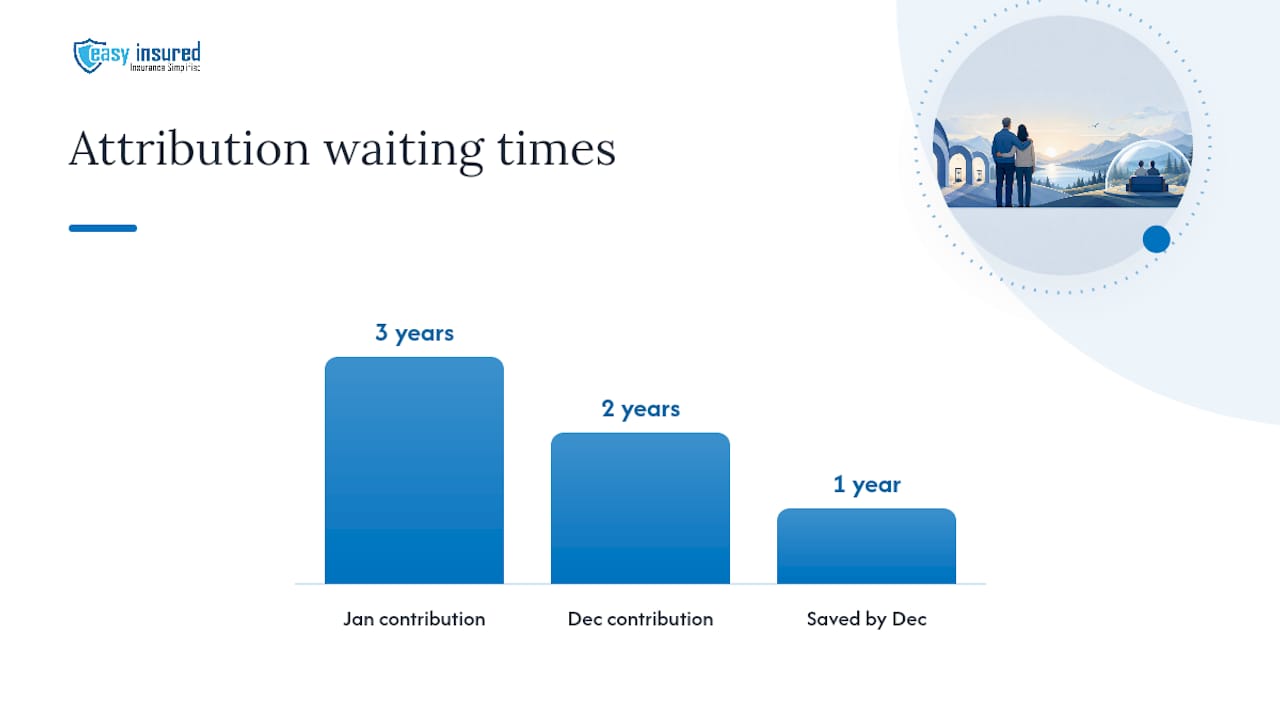
- Contributing in late December, rather than waiting until January, effectively shortens the wait before that money can be withdrawn without triggering attribution.
- Each contribution has its own three-year clock, so a lump sum made every December ages out of attribution risk faster than the same amount split across January deposits.
That single shift, moving a contribution from January to December, can save a year of waiting before your spouse can withdraw those funds without the income bouncing back to your tax return.
What Is the Three-Year Attribution Rule?
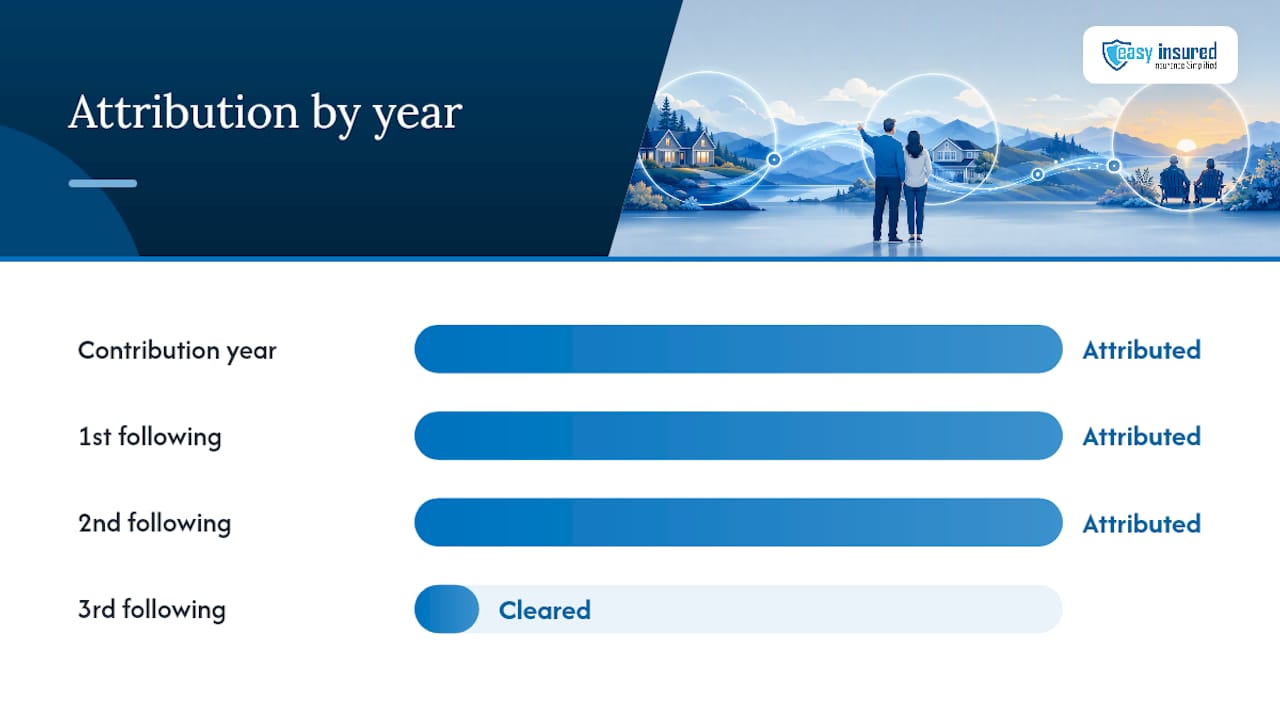
Subsection 146(8.3) of the Income Tax Act is the rule that trips up more couples than any other part of spousal RRSP planning. In plain terms: if the annuitant withdraws money in the same calendar year as a spousal contribution, or in either of the two calendar years right before it, that withdrawal amount gets taxed back to the contributor, not the annuitant.
Here’s how the clock actually runs for a contribution made in a given year:
- Contribution year itself: any withdrawal is attributed to the contributor.
- First following calendar year: still attributed to the contributor.
- Second following calendar year: still attributed to the contributor.
- Third calendar year after the contribution: attribution ends, and withdrawals are taxed to the annuitant.
Notice the gap between the two 2026/2027 rows. A contribution made in December 2026 clears attribution a full year before an equivalent contribution made just weeks later in January 2027. The rule also looks back across every contribution made, so if you’ve contributed in multiple years, the withdrawal gets matched against the most recent contributions first when the CRA calculates what’s attributed.
Withdrawals, Exceptions, and How to Report Them
Not every withdrawal falls under the three-year rule, and knowing the exceptions can save a couple from an unwanted tax surprise.
- RRIF minimum payments are exempt from attribution. Once a spousal RRSP converts to a RRIF, the mandatory annual minimum withdrawal is always taxed to the annuitant, regardless of recent contributions.
- Home Buyers’ Plan and Lifelong Learning Plan withdrawals are also exempt, since both programs carry their own repayment structure rather than triggering ordinary income inclusion.
- Contributor death, separation, or non-residency all end attribution going forward, since these life events change the legal and tax relationship between the two spouses.
- Withdrawals that fall inside the three-year window still generate a tax slip, and the annuitant and contributor use Form T2205 to work out exactly how much of the withdrawal belongs on each person’s return.
Keep every contribution receipt and RRSP statement going back at least three years. That paper trail is what makes filling out Form T2205 straightforward instead of guesswork.
Spousal RRSP vs. Regular RRSP: Weighing the Trade-offs
The core appeal of a spousal RRSP is income splitting in retirement. If one spouse’s RRSP and pension income would otherwise dwarf the other’s, funneling contributions into a spousal plan spreads that future income across two tax returns instead of concentrating it in one, which tends to lower the household’s combined lifetime tax bill.
The trade-offs are real, though:
- Money contributed within the last three years can’t be pulled out freely without the tax bouncing back to the contributor.
- Two RRSP accounts per couple mean more statements, more contribution tracking, and more chances to make a timing mistake.
- A spousal RRSP isn’t reversible into a regular RRSP, so once the structure is set up, you’re managing it as a distinct account indefinitely.
Pro Tip: Before opening a spousal RRSP, estimate the actual gap between your projected retirement incomes. If both spouses expect similar pension and RRSP income anyway, the attribution complexity may not be worth it.
Run through this quick checklist: How large is the income gap likely to be at retirement? Will withdrawals happen well outside the three-year window? Does either spouse expect to use the Home Buyers’ Plan? Your answers point toward whether a spousal RRSP earns its keep.
How to Open and Manage a Spousal RRSP the Right Way
- Choose a financial institution and open the account in the annuitant’s name, since ownership always sits with the spouse who will eventually withdraw the funds.
- Provide both spouses’ Social Insurance Numbers; the contributor’s SIN is recorded so contribution receipts get issued correctly for tax purposes.
- Set a contribution schedule that favors December over January whenever possible, so each deposit starts its three-year clock as early as it can.
- Plan any anticipated withdrawal, whether for retirement income, HBP, or LLP, at least three years past the most recent contribution.
- Keep the spousal RRSP separate from each spouse’s individual RRSP rather than merging them, since maintaining both preserves flexibility if one spouse needs cash on short notice.
Pro Tip: If you need money quickly and a withdrawal from the spousal RRSP would trigger attribution, check whether an individual RRSP withdrawal solves the same problem without the tax complication.
Where Easy-insured Fits Into Your RRSP Strategy
Spousal RRSP rules rarely exist in isolation. They intersect with life insurance beneficiary planning, disability coverage that protects future contribution room, and estate plans that decide who inherits an unwound RRIF. Easy-insured works with Canadian couples on exactly that intersection, retirement income strategy layered against real financial protection.
A few ways this connects directly to what you’ve just read:
- Coordinating RRSP-to-RRIF conversion timing with life insurance so a surviving spouse isn’t left managing both a tax bill and a income gap at once.
- Reviewing whether disability coverage adequately protects the contribution room a working spouse relies on to fund a spousal RRSP.
- Building an estate plan that accounts for how an unattributed versus attributed RRSP withdrawal affects a final tax return.
Our financial planning team can walk through your specific contribution history and retirement timeline before you make your next spousal RRSP decision.
The Part of Spousal RRSP Planning Most Couples Get Backwards
Most advice on spousal RRSPs treats the three-year attribution rule as the whole story, and that’s a mistake. The rule matters, but it’s a timing problem, not a strategy problem. Couples who plan their contributions with a calendar in hand, favoring December over January, retiring withdrawals three full years out, rarely run into attribution at all. The couples who get burned are the ones who treat the spousal RRSP like a regular savings account and pull from it on impulse.
The bigger gap I see in conventional coverage is that it treats spousal RRSPs as a standalone tax trick rather than one piece of a household’s broader financial picture. The real question isn’t just “will this split my income?” It’s whether the income gap at retirement is large enough to justify the administrative overhead, and whether your insurance and estate plans are built to handle what happens if one spouse passes away holding an account the other doesn’t fully understand.
If you take one thing from this: run the numbers on your actual projected retirement income gap before opening the account. The tax math only works if that gap is real.
— Frank
Get Help Coordinating Your Spousal RRSP With Your Insurance Plan
A spousal RRSP only pays off fully when it’s built alongside the rest of your financial picture, not bolted on afterward. Easy-insured helps Canadian couples connect retirement income splitting with the coverage that protects it: life insurance that accounts for how RRIF income will be taxed to a surviving spouse, disability coverage that safeguards the contribution room you’re relying on, and estate plans that spell out exactly how an RRSP transfers.

If you’re weighing whether a spousal RRSP fits your household, or you already have one and need the rest of your plan to catch up, our financial planning services start with a review of your current accounts, insurance, and retirement timeline. Couples also often pair this with whole life insurance to lock in estate value alongside their RRSP strategy. Book a conversation with Easy-insured to map out how your spousal RRSP, your insurance coverage, and your estate plan should work together.
This article is general information, not a substitute for advice from a qualified financial advisor. Consult a qualified financial professional about your own circumstances before acting on anything here.