
Most life insurance policies above a modest coverage amount require a paramedical exam, a short health screening the insurer pays for and schedules on your behalf. It’s not a doctor’s visit. It’s a 20 to 45 minute checkup, often at your kitchen table, that gives an underwriter the numbers they need to price your policy.
You’ll likely be asked to complete one if:
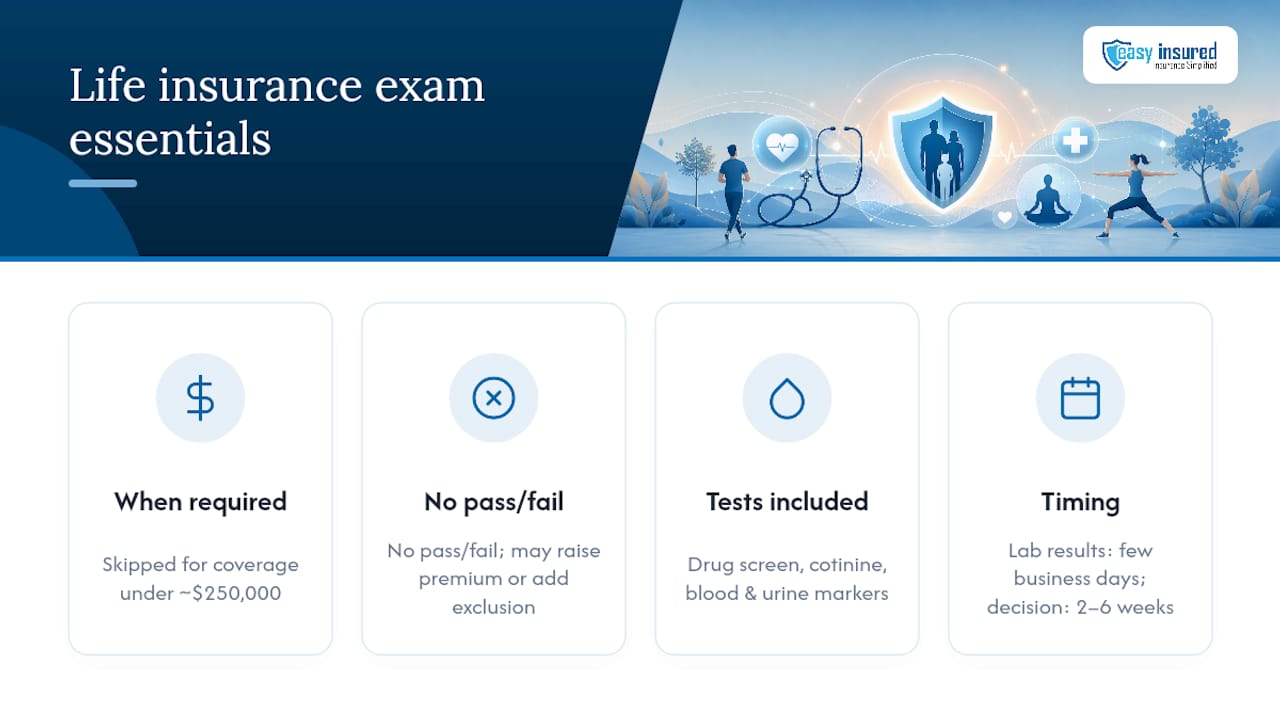
- You’re applying for coverage above roughly $250,000, though the threshold varies by insurer
- You’re older, or your health history includes a chronic condition, past surgery, or family history of disease
- You use tobacco or have a build or blood pressure outside typical ranges
- You’re applying for a permanent policy like whole or universal life, which insurers tend to underwrite more thoroughly
If you’re comparing quotes right now, ask each insurer directly whether your policy amount requires an exam. It changes your timeline more than almost anything else in the process.
Key Takeaways
A life insurance medical exam is a short, insurer-paid health screening that sets your rate class, and skipping it through no-exam alternatives usually means paying more for less coverage.
| Point | Details |
|---|---|
| Exam is free and quick | Insurers cover the cost, and most appointments run 20 to 45 minutes at a location you choose. |
| Coverage amount drives the requirement | Exams commonly kick in above roughly $250,000, though thresholds vary by insurer. |
| Preparation affects your numbers | Hydration, sleep, fasting, and avoiding alcohol or exercise beforehand can prevent misleading readings. |
| No-exam options trade speed for cost | Simplified and guaranteed issue skip testing but usually carry higher premiums and lower limits. |
| Easy-insured compares both paths | Advisors help you weigh exam based and no-exam policies before you apply, based on your actual health profile. |
Table of Contents
- What Does a Life Insurance Medical Exam Involve?
- What Lab Tests And Measurements Do Insurers Order?
- When Do Insurers Require a Medical Exam?
- How Exam Results Shape Your Rate And Policy Decision
- No-Exam Life Insurance: Simplified, Guaranteed, And Accelerated Options
- How To Prepare For A Life Insurance Physical Exam
- What Underwriters Flag As Red Flags
- Who Pays And How Long Does The Process Take?
- What Happens During Your Paramedical Appointment
- If Your Results Show A Health Concern
- An Advisor’s Take On Managing The Exam Process
- Getting The Right Coverage Without The Guesswork
- Frequently Asked Questions
- Sources
What Does a Life Insurance Medical Exam Involve?
A paramedical exam is a targeted health screen ordered by the insurance company, not a general checkup with your family doctor. A licensed paramedical technician runs through a set list: your medical history questionnaire, basic vitals, and a blood and urine sample. There’s no diagnosis, no treatment plan, nothing that resembles a normal appointment. The examiner is there to collect data points an underwriter will use later.
One thing worth clearing up before you go further: a “life insurance exam” sometimes gets confused with the licensing exam insurance agents take to sell policies. That’s a completely separate thing, run by organizations like Kaplan Financial for people entering the industry. If you’re applying for coverage, you’ll never sit for anything like that.
The technician is usually a contractor from a mobile paramedical company, not an employee of the insurer itself. They’ll come to your home, your workplace, or a nearby clinic, whichever is easiest for your schedule. You do not pay for any of it.
A few things to bring:
- Government-issued photo ID
- A list of current medications, including dosages
- Names and contact information for your doctors, if requested
The exam itself typically runs 20 to 45 minutes, depending on whether an EKG or extended questionnaire is involved.
Pro Tip: Ask your advisor or the paramedical company to schedule the appointment first thing in the morning. It’s easier to fast overnight than to skip meals all day, and most lab values read more consistently before food and coffee enter the picture.
What Lab Tests And Measurements Do Insurers Order?
Insurers rely on a standard panel of measurements and lab tests to flag risk before they set your rate. Each one maps to a specific concern, and knowing what they’re looking for takes some of the mystery out of the process.

| Test or measurement | What it checks | Why it matters to underwriters |
|---|---|---|
| Height, weight, BMI | Body composition | Obesity correlates with diabetes, heart disease, and higher mortality risk |
| Blood pressure and pulse | Cardiovascular function | Elevated readings can signal hypertension or cardiac strain |
| Lipid panel (cholesterol) | Cardiovascular risk | High LDL or low HDL raises heart disease risk |
| Fasting glucose / HbA1c | Blood sugar control | Flags undiagnosed or poorly managed diabetes |
| Liver enzymes | Liver function | Elevated levels can indicate alcohol use, hepatitis, or liver disease |
| Kidney markers (creatinine) | Kidney function | Abnormal results suggest chronic kidney disease |
| Cotinine | Nicotine exposure | Detects tobacco use even if undisclosed on the application |
| Drug screen | Substance use | Flags illicit drug use that affects risk classification |
| HIV / hepatitis panel | Infectious disease | Required by most insurers for larger policies |
| Urine protein | Kidney and metabolic function | Early marker for kidney stress or diabetes complications |
These markers come straight from the standard lab panel insurers use to underwrite applications, and the list holds fairly consistent across major carriers.
For larger face amounts or older applicants, insurers sometimes add an EKG to check heart rhythm, or in rare cases a cognitive screening or stress test. These aren’t standard for most applicants, but they show up more often once coverage climbs into the millions or the applicant is past their sixties.
Blood draws for these panels usually involve two to three vials, which the technician sends to a lab. Results typically reach the insurer within a few business days, though a full underwriting decision takes longer once everything is reviewed together.
When Do Insurers Require a Medical Exam?
There’s no single trigger. Insurers weigh coverage amount, age, and health disclosures together, and the mix shifts from one company to the next.
Coverage amount tends to matter most. Policies under roughly $250,000 increasingly qualify for simplified or accelerated underwriting that skips the exam entirely, while anything above that range commonly requires one. That threshold isn’t fixed. Some insurers push it higher for younger, healthier applicants, and lower it for anyone with a flagged risk factor.
Beyond dollar amount, a few things almost guarantee you’ll be asked to sit for an exam:
- Disclosed medical conditions like diabetes, heart disease, or cancer history
- Current or recent tobacco use, even occasional
- High-risk occupations or hobbies (commercial diving, aviation, motorsports)
- A prior insurance decline, postponement, or rated policy with another carrier
A 30-year-old non-smoker applying for $150,000 in term coverage might qualify for a no-exam policy in a matter of days. A 58-year-old applying for $750,000 with a history of high cholesterol is going to sit for the full panel almost every time. Age and amount compound each other fast.
How Exam Results Shape Your Rate And Policy Decision
Every marker on your bloodwork feeds into a rate class. Insurers typically sort applicants into preferred, standard, or substandard tiers, and the gap between preferred and standard pricing can be significant over the life of a policy.
Certain findings predictably move the needle. Uncontrolled hypertension, elevated A1C consistent with diabetes, high LDL cholesterol, or a BMI well outside normal range usually push you from preferred into standard or substandard territory. In more serious cases, an insurer might attach a flat extra (a fixed surcharge added to your premium), exclude a specific condition from coverage, postpone the decision pending more information, or decline the application outright.
Conversely, a healthier-than-average result can lower your premium below what you might expect based on age alone. This works in both directions, which is exactly why the exam matters as much for people in good health as for anyone managing a condition.
Pro Tip: If a result surprises you, such as unexpectedly high glucose, ask your insurer for a retest before accepting a rate class. Labs make errors, and a rushed or non-fasting sample can throw off a single reading without reflecting your actual health.
No-Exam Life Insurance: Simplified, Guaranteed, And Accelerated Options
If skipping the needle sounds appealing, three main paths exist, and each trades speed for cost or coverage limits.
Simplified issue skips lab testing entirely and relies on a health questionnaire. Approval often takes days instead of weeks. Guaranteed issue goes further, accepting nearly all applicants regardless of health, usually with lower coverage caps and a waiting period before the full death benefit applies. Accelerated underwriting uses algorithms and existing data (prescription history, motor vehicle records) instead of a physical exam, and for healthy applicants under certain ages and limits, it can land on pricing close to fully underwritten coverage.
| Option | Speed | Typical coverage | Cost vs. fully underwritten |
|---|---|---|---|
| Simplified issue | Days | Lower to mid face amounts | Generally higher |
| Guaranteed issue | Fast, minimal review | Small, often final-expense range | Highest per dollar of coverage |
| Accelerated underwriting | Days to a couple weeks | Mid to higher amounts for qualifying applicants | Comparable for healthy applicants |
Simplified and guaranteed issue make the most sense when you need coverage fast, manage a health condition that would complicate traditional underwriting, or only need a smaller policy to cover final expenses. Guaranteed issue policies exist specifically for that last scenario. Accelerated underwriting suits healthy applicants who want to avoid scheduling a technician but still want competitive pricing on a larger policy.
How To Prepare For A Life Insurance Physical Exam
Your habits in the days before the exam affect your numbers more than most applicants realize. None of this is about faking good health. It’s about not letting a temporary spike get baked into your permanent rate class.
- Drink plenty of water the day before and morning of your appointment
- Get a normal night’s sleep, ideally seven or more hours
- Skip strenuous exercise for 24 hours; a hard workout can temporarily elevate blood pressure and protein in urine
- Avoid alcohol for several days beforehand, since it affects liver enzymes and triglycerides
- Follow any fasting instructions exactly, usually eight or more hours, for accurate glucose and lipid readings
- Bring ID, your medication list, and doctor contact information
Each of these matters for a specific reason. Dehydration concentrates your blood, which can distort cholesterol and kidney readings. Exercise and alcohol both nudge liver enzymes and blood pressure upward temporarily, exactly the markers underwriters flag first.
Pro Tip: Book a morning slot if fasting is required, and take your regular prescribed medications as normal unless your doctor says otherwise. Skipping a blood pressure medication to “look healthier” backfires. It usually raises your reading instead.
What Underwriters Flag As Red Flags
Some findings almost always lead to a decline or steep rate increase. Advanced untreated cancer, severe uncontrolled heart disease, end-stage kidney disease requiring dialysis, evidence of illicit drug use, and severely uncontrolled diabetes all fall into that category for most carriers.
Plenty of other findings look concerning on paper but usually just bump your rate rather than end your application:
- Moderate hypertension that’s being treated and controlled
- Diabetes managed well with medication and stable A1C
- A BMI above the ideal range without other complicating factors
What separates a manageable rate increase from an outright decline often comes down to disclosure. Full, honest medical records let an underwriter see the whole picture, including treatment and control, rather than a single alarming data point in isolation.
Who Pays And How Long Does The Process Take?
The insurance company covers the full cost of your exam. You’ll never see a bill from the paramedical technician or the lab.
The appointment itself usually wraps up in under 45 minutes. From there, lab results typically reach the insurer within a few business days, but the full underwriting decision, factoring in your application, medical records, and any follow-up requests, usually takes two to six weeks.
If your file seems stuck past that window, don’t just wait it out. Contact your broker or the insurer directly, ask for a status update, and request copies of your test results if anything seems delayed on the medical side specifically.
What Happens During Your Paramedical Appointment
- Verification. The examiner confirms your identity with photo ID and reviews the appointment paperwork.
- Questionnaire review. You’ll go through your medical history, medications, and lifestyle questions, sometimes repeating details already on your application.
- Vitals and measurements. Height, weight, blood pressure, and pulse get recorded.
- Samples. A blood draw (usually two to three vials) and a urine sample follow.
- EKG, if required. For larger policies or older applicants, a quick heart tracing may be added.
- Wrap-up. You sign consent forms, confirm contact details, and the technician explains next steps.
Wear something with easy sleeve access for the blood draw. Bring your ID and medication list. Most appointments finish inside an hour. You won’t get lab results on the spot. Those go to the insurer, and your broker or the carrier will reach out once underwriting reviews everything together.
If Your Results Show A Health Concern
An unexpected finding doesn’t automatically mean a decline. Insurers commonly request additional information before making a final call, including an Attending Physician Statement from your doctor, a repeat lab test, or documentation showing a condition is stable or well managed.
Start by asking your broker exactly what the insurer is questioning. Sometimes it’s a single borderline value, like a glucose reading that was slightly high because the sample wasn’t drawn under proper fasting conditions. In that case, requesting a retest is often free and can resolve the issue within about two weeks.
If the concern is more substantive, gather records from your physician showing diagnosis history, current treatment, and control over time. A well-managed chronic condition with consistent documentation almost always underwrites better than the same condition with gaps or inconsistency in the file. Insurers aren’t just reacting to a number. They’re trying to understand the trend behind it.
Whatever you do, don’t let a flagged result push you toward hiding information on a follow-up form. Discrepancies between your application and your medical records slow underwriting further and can jeopardize the whole application. Transparency, even when a number looks bad, tends to move things faster than silence.
An Advisor’s Take On Managing The Exam Process
Brokers use exam results the same way underwriters do: as one input alongside your full history, not the whole story. My advice to every client is the same. Answer the health questionnaire completely and honestly, because mismatches between what you say and what the lab finds create delays nobody wants. At Easy-insured, we walk clients through both paths, exam based and no exam, so the choice fits their actual health picture rather than a guess.
Getting The Right Coverage Without The Guesswork
Deciding between a fully underwritten policy and a no-exam option isn’t something you should figure out alone from a search engine. Easy-insured walks you through both paths side by side, comparing what a paramedical exam might do to your rate against what a simplified or guaranteed-issue policy would cost for the same coverage.

We handle the scheduling logistics too, coordinating with the paramedical company so the appointment fits your calendar instead of the other way around. If your health history is straightforward, we’ll often point you toward term life coverage, which tends to offer the strongest value for medically underwritten applicants. If speed matters more than price, we’ll walk you through guaranteed-issue options that skip the exam entirely. Get a personalized quote and we’ll tell you upfront whether your situation calls for an exam or not, before you commit to anything.
Frequently Asked Questions
Is a life insurance medical exam mandatory?
Not always. It depends on your coverage amount, age, and health history. Many applicants under roughly $250,000 in coverage qualify for simplified or accelerated underwriting that skips it entirely.
What disqualifies you from getting life insurance?
Very few conditions cause an automatic decline. Advanced untreated cancer, severe uncontrolled heart disease, and end-stage kidney disease are among the few that commonly do. Most other conditions lead to a higher rate class rather than a denial.
Can I fail a life insurance medical exam?
There’s no pass or fail. The exam produces data an underwriter reviews alongside your application. Poor results can mean a higher premium, an exclusion, or in rare cases a decline, but there’s no single threshold for “failing.”
How long does it take to get life insurance after the medical exam?
Lab results usually reach the insurer within a few business days. The full underwriting decision, combining your exam, application, and any medical records, typically takes two to six weeks.
Does a life insurance exam check for drugs?
Yes. Most panels include a drug screen and a cotinine test for nicotine, in addition to standard blood and urine markers like glucose, cholesterol, and kidney function.
This article is general information, not a substitute for advice from a qualified financial advisor. Consult a qualified financial professional about your own circumstances before acting on anything here.
Sources
- Prepare for my exam | ExamOne
- What to expect during my paramedical exam | ExamOne (MyExamOne)
- Essential guide to life insurance lab tests | Dynacare
- Life Insurance Medical Exam: What to Expect in 2026 | MoneyGeek
- Life insurance medical exams: what to expect | NerdWallet